Italian farmland with rows of vegetable crops

For Italian growers

The best soil moisture sensor system for Italy

From the vineyards of Piedmont to the citrus of Sicily, Italian farms face the same squeeze: less water, hotter summers, and soils that change from one field to the next. SoilSense tells you exactly when each field needs water — so you irrigate on evidence, not on the calendar.

Prefer to talk it through first? Giuseppe, our Italian head of sales, is one call away.

Italy trusts SoilSense

67 farms across Italy

Kiwi
Vegetables
Orchard fruit
More crops
Citrus
Citrus
More crops
Vegetables
Tomatoes
Citrus
Kiwi
Vegetables
Olives
Grapes
Citrus
More crops
Vegetables
Citrus
Orchard fruit
Citrus
Tomatoes
Kiwi
Kiwi
Kiwi
More crops
Tomatoes
Grapes
Vegetables
Grapes
Kiwi
More crops
Olives
Kiwi
Vegetables
More crops
Orchard fruit
Kiwi
Vegetables
Tomatoes
Grapes
Citrus
Grapes
Vegetables
Kiwi
Citrus
Orchard fruit
Grapes
Vegetables
Orchard fruit
Olives
Orchard fruit
More crops
More crops
Vegetables
Grapes
Grapes
Tomatoes
More crops
Tomatoes
Kiwi
Vegetables
Orchard fruit
Orchard fruit
Olives
Orchard fruit
Vegetables
More crops

Italian farming is being rewritten by water

Less water, every season

Drought is no longer an occasional bad year. The Po Valley — the breadbasket that feeds much of the country's processing tomatoes, maize, and rice — has lurched through its driest seasons on record, and consortia across the south now hand growers firm caps on how much water they may draw. When the volume is fixed, the only variable left is how well you spend it.

No two fields behave alike

Italian fields are anything but uniform. Heavy clay in Emilia-Romagna behaves nothing like the sandy coastal soils of Puglia or the volcanic ground around Etna — and even neighbouring plots on the same farm dry down at different rates. Irrigating every zone on the same schedule wastes water on some and starves others.

See what the root zone holds

Soil moisture sensors close that gap. Instead of guessing from the weather or the look of the leaves, you see what the root zone is actually holding, field by field — and decide from there. That is the entire job SoilSense is built to do.

Growers across Italy already trust SoilSense

From the Alpine north to the islands, Italian farms are already irrigating on real soil data. Each dot is a farm; hover to see the crop. Exact locations are kept private.

Crops we monitor

  • Citrus
  • Grapes
  • Olives
  • Kiwi
  • Tomatoes
  • Orchard fruit
  • Vegetables
  • More crops
Kiwi
Vegetables
Orchard fruit
More crops
Citrus
Citrus
More crops
Vegetables
Tomatoes
Citrus
Kiwi
Vegetables
Olives
Grapes
Citrus
More crops
Vegetables
Citrus
Orchard fruit
Citrus
Tomatoes
Kiwi
Kiwi
Kiwi
More crops
Tomatoes
Grapes
Vegetables
Grapes
Kiwi
More crops
Olives
Kiwi
Vegetables
More crops
Orchard fruit
Kiwi
Vegetables
Tomatoes
Grapes
Citrus
Grapes
Vegetables
Kiwi
Citrus
Orchard fruit
Grapes
Vegetables
Orchard fruit
Olives
Orchard fruit
More crops
More crops
Vegetables
Grapes
Grapes
Tomatoes
More crops
Tomatoes
Kiwi
Vegetables
Orchard fruit
Orchard fruit
Olives
Orchard fruit
Vegetables
More crops

Each dot marks a SoilSense farm in Italy.

How SoilSense works

Sensors in the soil. Answers on your phone.

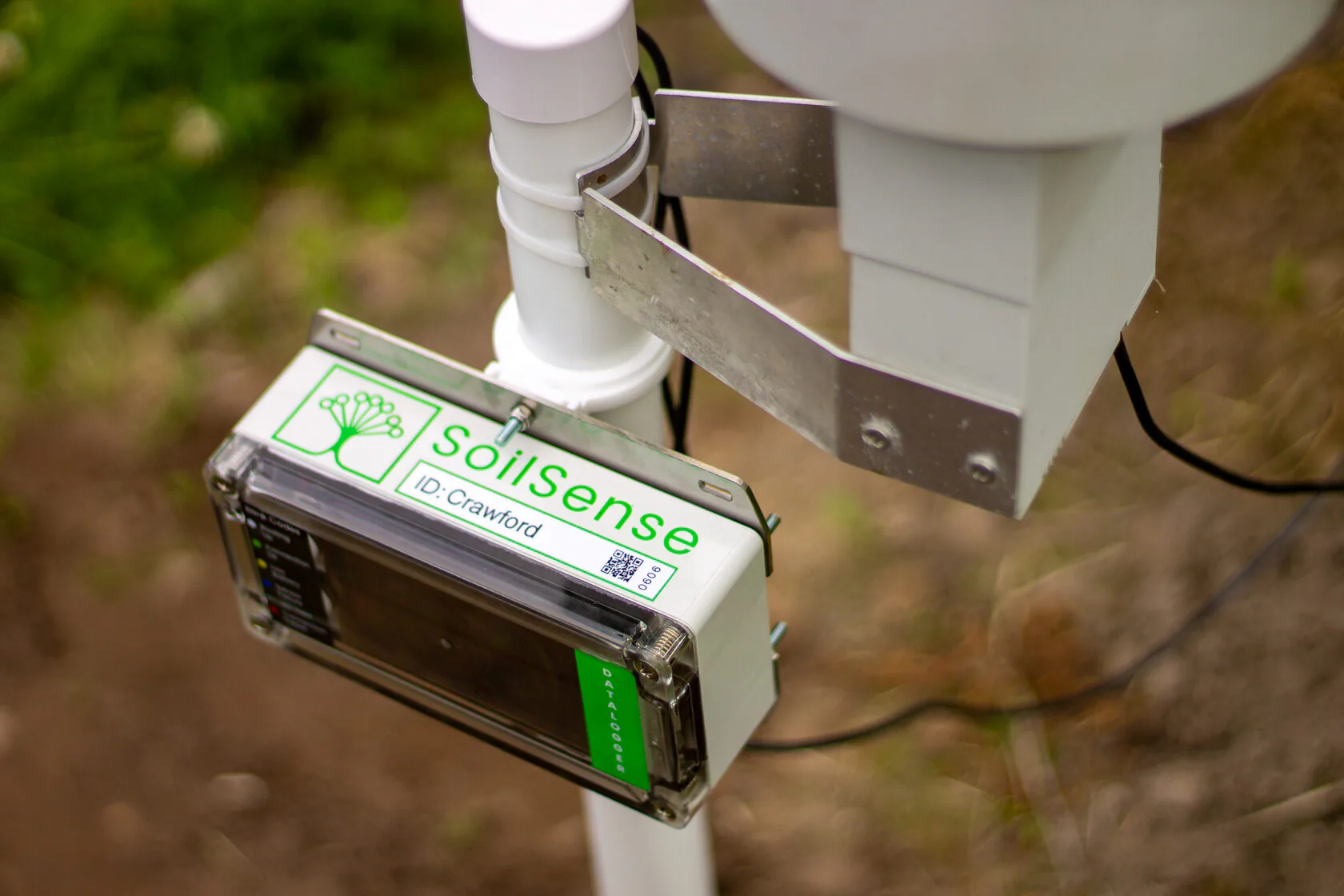
A wireless, solar-powered datalogger reads soil moisture right at the root zone and sends it straight to the SoilSense app — so you can see exactly how much water each field holds, and act before stress sets in.

The setup

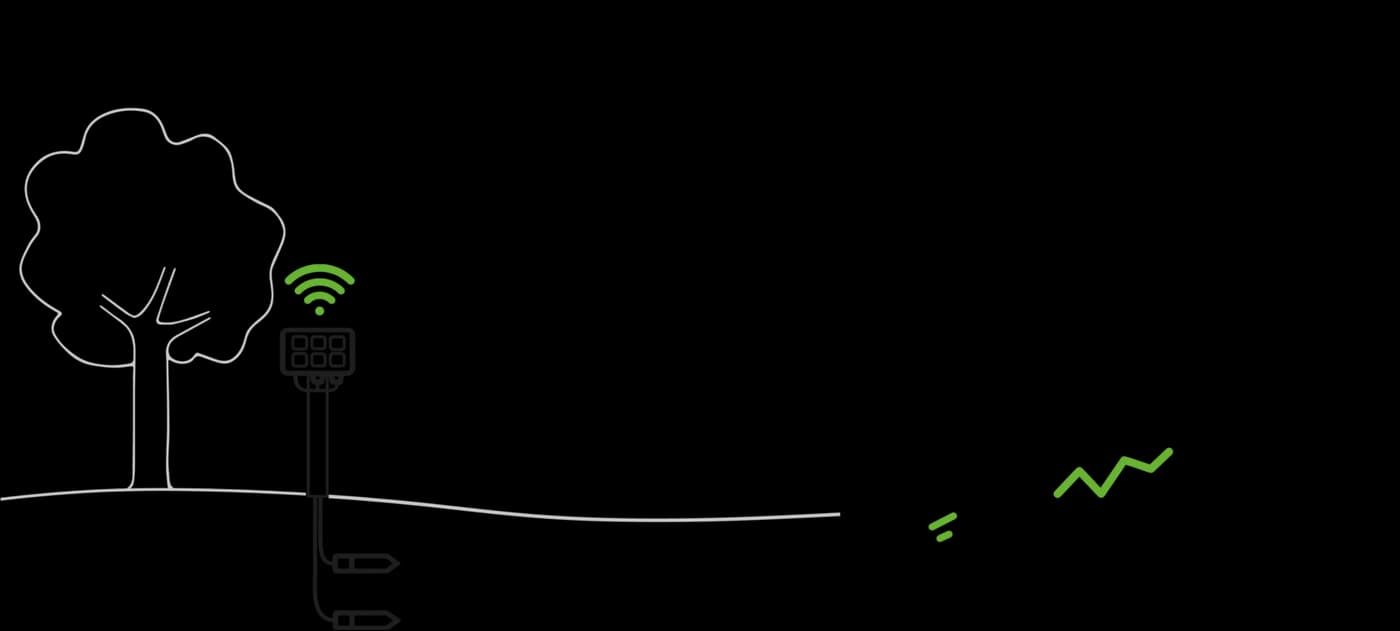
Diagram of how SoilSense works: a datalogger with buried soil sensors sends data wirelessly to the cloud and on to the SoilSense app on laptop and phone.

The SoilSense app

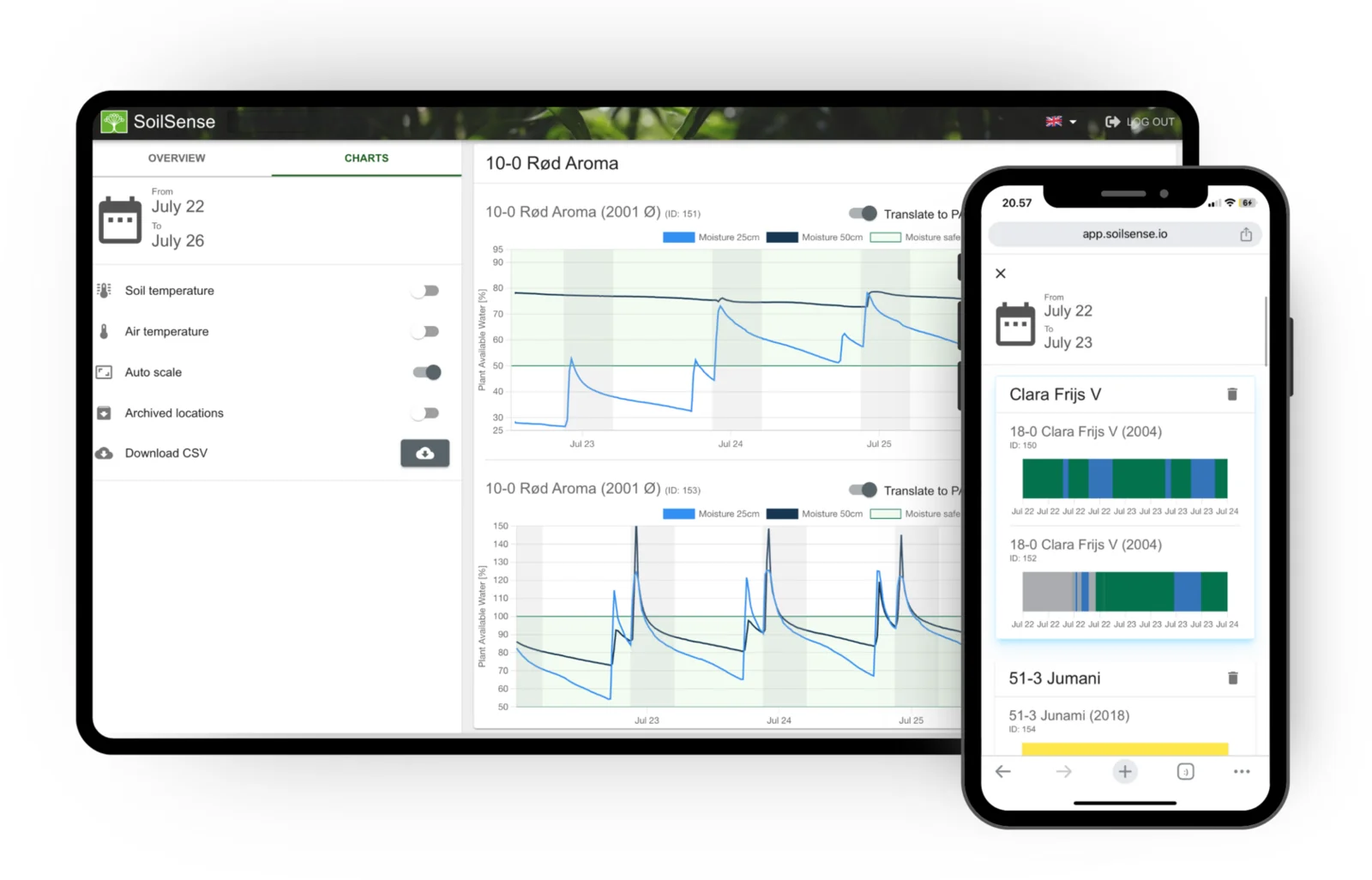
The SoilSense dashboard on a tablet and a phone, showing plant-available-water charts.

The same data, live on your phone and tablet — in Italian.

No agronomist needed

Just read the colour.

When a field needs your attention, SoilSense sends a plain-language alert to your phone — so you know whether to water, wait, or ease off, at a glance.

🌱SoilSenseSoilSense · now

One of your sensors has dropped below the safe soil-moisture range.

Stressed

Too dry — water now

Getting dry

Plan to irrigate soon

Just right

Ideal soil moisture

Too wet

Ease off the water

Built around the crops Italy actually grows

Whatever you grow, the question is the same: is there enough water in the root zone right now — and where is the next litre best spent? Here is how that plays out across Italy's main crops.

Wine grapes

Quality depends on controlled water stress at the right moment — too much and the fruit dilutes, too little and the vine shuts down.

Watch the root zone through veraison and ripening so you can apply deficit irrigation deliberately, not by guesswork.

Olive groves

Often dry-farmed or run on minimal water across large, undulating groves where conditions vary widely from block to block.

A few sensors in representative zones show which blocks truly need the limited water you have, and which can wait.

Processing tomatoes

High, consistent demand through fruit set and fill — and increasingly tight allocations across the Po Valley and the south.

Hold the root zone in the ideal band to protect yield and Brix while staying inside your water budget.

Citrus & orchard fruit

Deep, perennial roots and high-value trees where both over- and under-watering carry a cost that compounds year over year.

Track moisture at multiple depths to match irrigation to how the trees actually root, and avoid waterlogging in heavy ground.

Field & open vegetables

Shallow roots and fast cycles mean a missed irrigation shows up in the crop within days.

High-frequency readings and instant alerts catch a drying field before the plants feel it.

Kiwi & berries

Unforgiving of both drought and waterlogging — the wettest and driest extremes both damage the crop.

Keep moisture inside a narrow safe band with continuous data instead of reacting after the damage is visible.

Why it fits Italian farms best

Plenty of sensors measure moisture. The difference is whether the whole system survives an Italian field — and whether you can actually run it.

Proven in heavy clay

Italian soils are often fine-textured and hard on sensors. SoilSense was independently tested on Vertisol clay and performed within its accuracy spec — exactly the soils that defeat cheaper probes.

Calibrates to your soil itself

The sensors auto-calibrate to the soil they sit in. No lab samples, no agronomist on staff, no manual tuning per field.

Works where your fields are

Solar-powered and cellular (NB-IoT / LTE-M with 2G fallback) — no Wi-Fi, no mains power, and it keeps running for months without sun.

Italian app, Italian support

The platform is in Italian, and so is the person who answers. Giuseppe and the team support Italian growers directly, on an Italian number.

Spend less water, protect yield

Independent research on sensor-guided irrigation reports water savings of up to 45% and yield gains of up to 25% versus watering by guesswork.

Try it before you commit

Start with a 60-day risk-free trial and a full refund if it doesn't earn its place — see how it reads your own soils before you buy.

Accuracy claims are backed by independent third-party testing, not our own lab. Read the AgrifoodTEF & University of Córdoba validation.

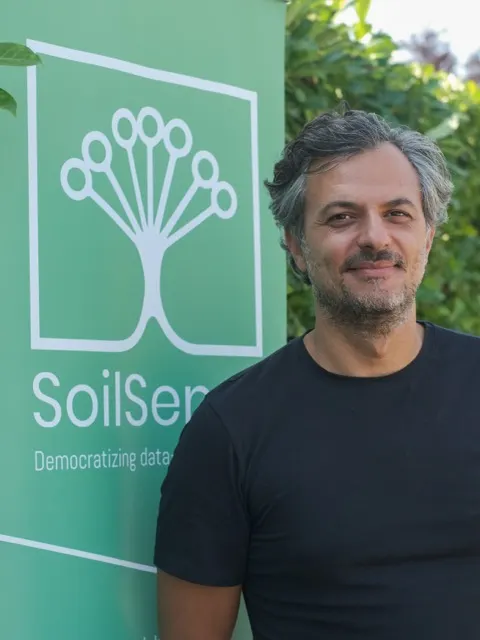
Giuseppe Geresia, Head of Sales for Italy at SoilSense

Your point of contact

Meet Giuseppe, your Italian point of contact

When you reach out to SoilSense from Italy, you don't get a chatbot or a ticket queue — you get Giuseppe. He's Italian, he knows Italian farming, and he genuinely enjoys helping growers get this right.

He'll talk through your crops, your soils, and your water situation in plain Italian, help you place the sensors where they'll actually tell you something, and stay reachable long after the boxes arrive. No jargon, no pressure — just someone on your side who wants the system to pay off for you.

Giuseppe Geresia Head of Sales — Italy

Call or email Giuseppe directly

Great technology at a sustainable cost, and support that's always there when you need it. The (huge) question of when and how much to irrigate — we've solved it.
Giuseppe Sorbello
Top products, with even better customer service. Highly recommended.
Fabio Aragona
I highly recommend them. Thanks for your assistance.
Francesco Malluzzo

Funding

Public funding can help pay for it

Italy's CAP Strategic Plan rewards precision-agriculture practices, and several regional measures (such as the SRA24/ACA24 precision-agriculture payment) can support soil monitoring and decision-support tools. Worth checking before you buy.

See the Italian precision-agriculture grant

Questions Italian growers ask

The things growers want to know before they decide.

Let's talk

See what your soil is really doing

Buy your system today, or book a free consultation and we'll help you plan exactly where the sensors should go on your farm.

Talk to Giuseppe in Italian · +39 3513963183