
September 4, 2026
Less Diesel, Irrigation Halved: How a Pear Orchard in Emilia-Romagna Manages Water with SoilSense Sensors
Massimo Gallerani manages 5 hectares of pears in Emilia-Romagna with a single SoilSense system. The result: irrigation cut from 16 to about 6 hours a week, less diesel, more efficient water use, and better-balanced trees — decisions driven by data, not habit.
Name: Massimo Gallerani · Region: Emilia-Romagna · Crop: Pears · Monitored area: 5 hectares with a single SoilSense system
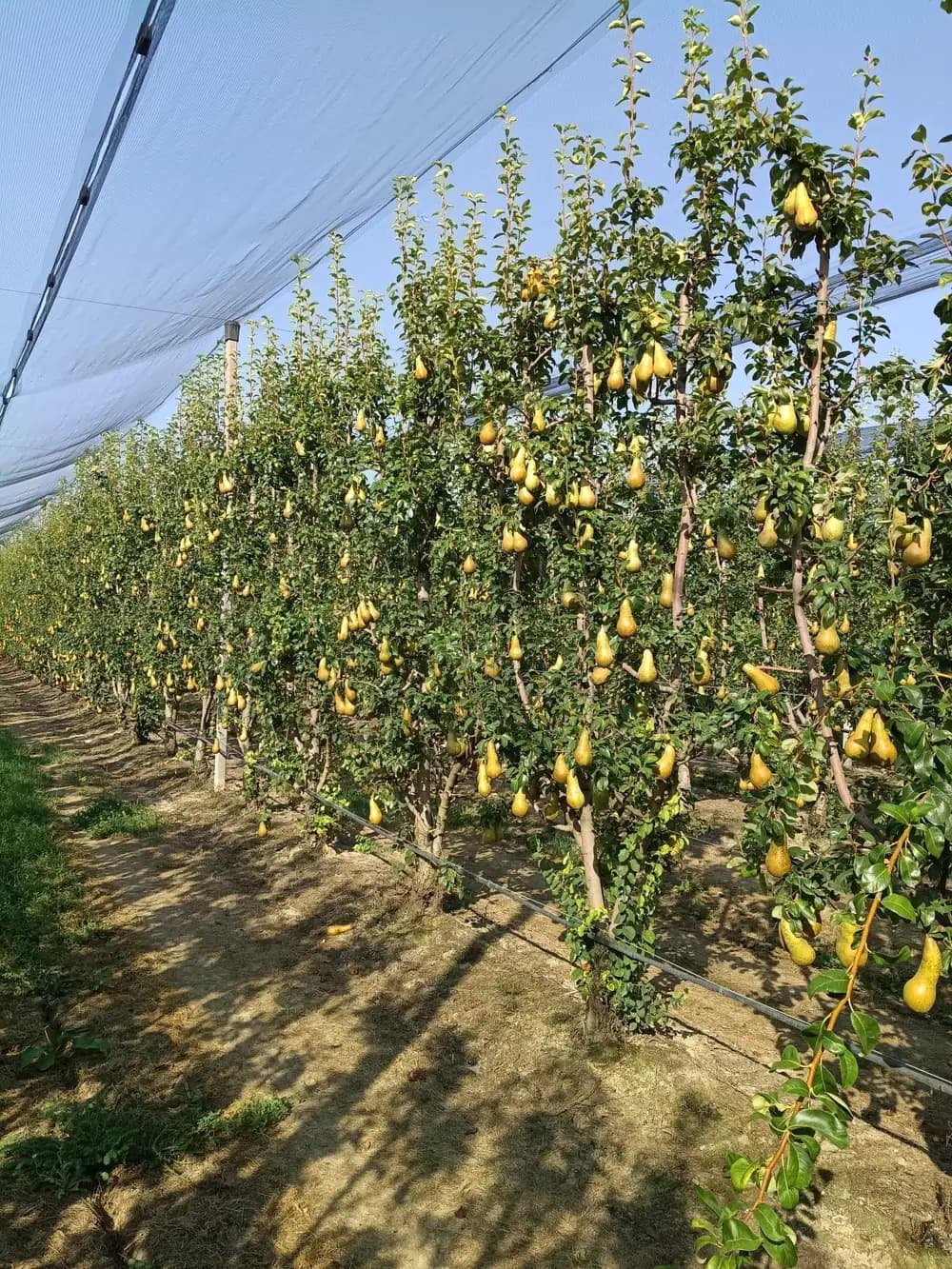
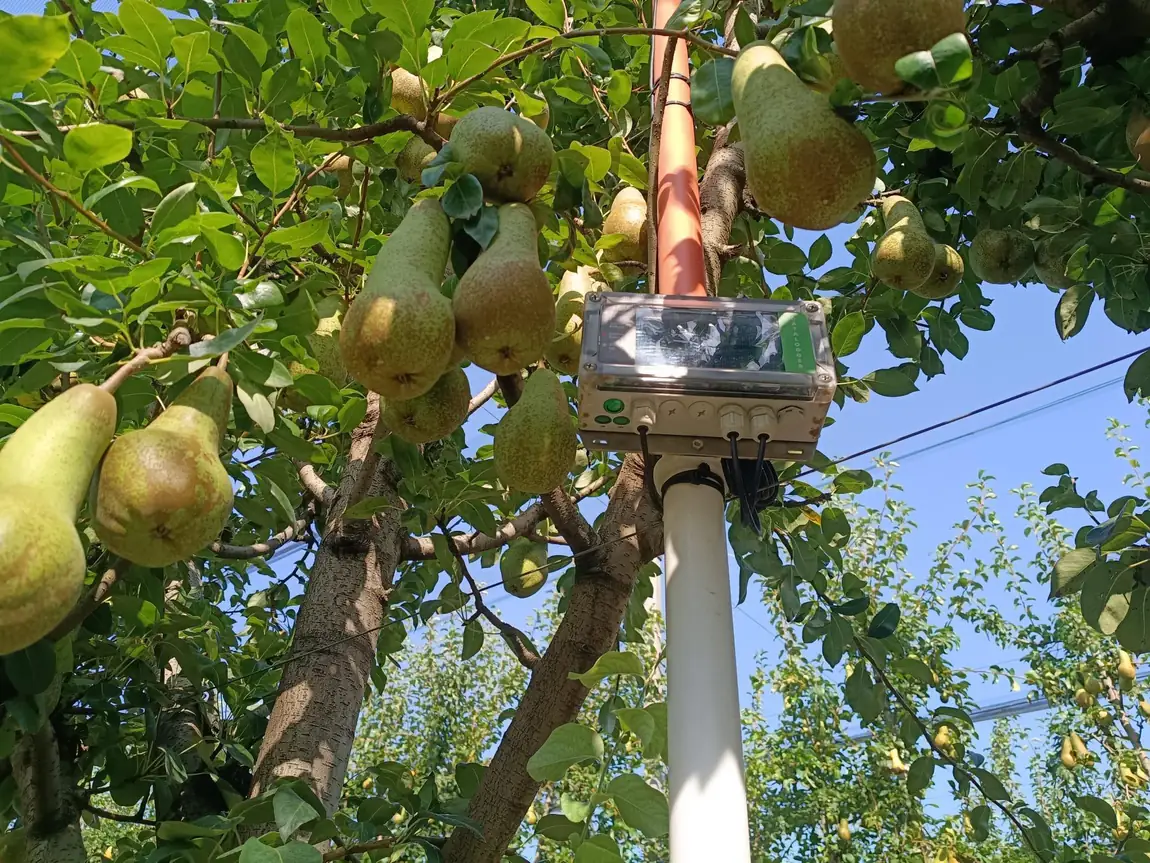
In the heart of Emilia-Romagna's pear country, among rows shielded by anti-hail netting and heavy with fruit ready for harvest, Massimo Gallerani manages 5 hectares of pears with a single SoilSense monitoring system. The most concrete change? The way he decides when and how much to irrigate.
From 8 hours twice a week to 2 hours every 3 days
Q: How has irrigation management changed since you started using the sensors?
I've been able to fine-tune irrigation much more precisely: I went from 8 hours twice a week to just 2 hours every 3 days.
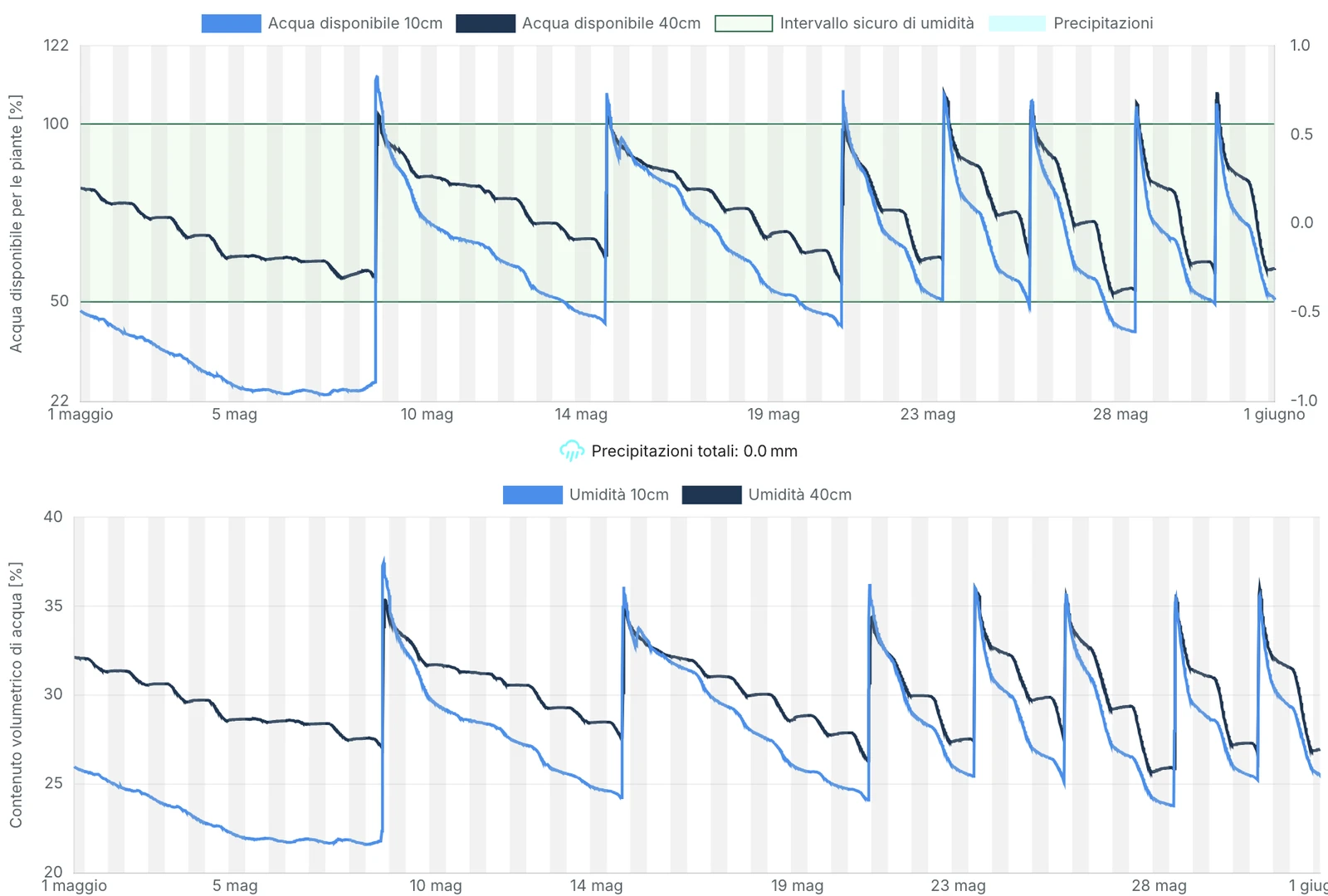
The numbers tell the whole story: from 16 hours of irrigation a week to about 6, while maintaining — in fact improving — the condition of the trees. It's not just about irrigating less, but about irrigating when it's truly needed, with shorter, more frequent events calibrated to the orchard's real water demand.
The monitoring charts show this new regularity clearly: closely spaced irrigation cycles that keep plant-available water consistently within the safe moisture range, avoiding both water stress and excess.
Objective data instead of gut feeling
Q: In what other ways have the sensors helped you make decisions?
They've removed all doubt in the moments when I would have irrigated out of habit, and in others when I wouldn't have irrigated at all. Now I have an objective figure to rely on, instead of going by feel.
This is perhaps the subtlest but most important benefit of continuous monitoring: removing the margin of uncertainty that has always come with irrigation decisions. Habit and intuition remain a valuable asset for anyone who has worked the land for years, but when they're paired with objective, continuous data, choices become more solid — and easier to defend, even through atypical seasons.
Less diesel, water used more efficiently
Q: What impact has this had on costs and resources?
I've saved on both diesel and water — a benefit that's as concrete as it is practical.
Fewer irrigation hours mean fewer pumping hours, and therefore less diesel burned to run the system: a direct saving on costs. On top of that comes more efficient use of water, an increasingly precious resource.
Healthier trees, without the excesses of the past
Q: And how are the trees responding?
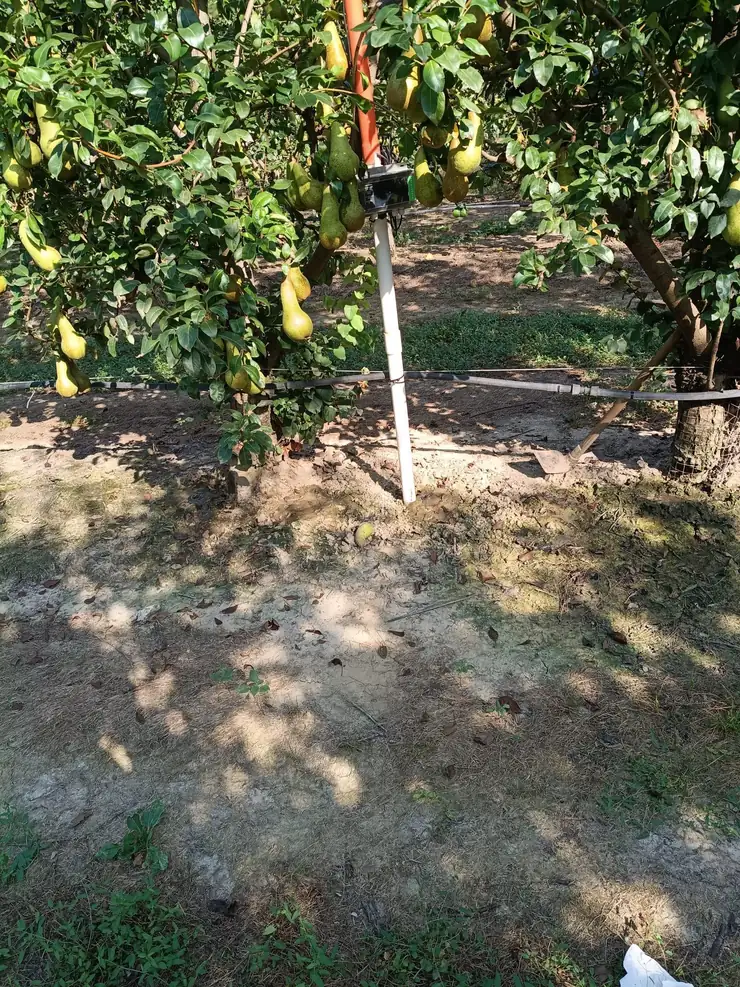
Taking other factors into account too, the trees are magnificent. I think in past years they suffered from too much water — something I'm now able to avoid.
It's an observation that comes up often among those who begin monitoring the soil continuously: the problem, more than shortage, was excess. Irrigating "out of habit" — with long, infrequent cycles like the earlier 8-hour sessions — can deliver more water than the plant can actually use, with consequences for the roots, soil oxygenation and, over time, the vigour of the plant itself. Seeing the data in real time allowed Massimo to correct this tendency.
The result shows in the numbers: this is the best harvest in years — an outcome Massimo probably attributes to other factors as well, but in which more precise irrigation management undoubtedly plays a part.
Next steps: targeted irrigation into autumn, and preparing for spring
Q: What are the next steps with the sensors?
I'll also use them before winter to keep irrigating in a targeted way, and I'm counting on them to help me get ready for spring — for the iron chelate, for example — so I start from an optimal baseline for irrigation.
Monitoring doesn't stop when the harvest season ends: knowing the soil's water status even through the colder months makes it possible to reach bud break with a clear picture of the starting conditions — useful, too, for planning targeted interventions such as iron fertilization, often decisive for the health of the orchard in the early stages of the season.
One system, a whole orchard running more efficiently
Massimo Gallerani's experience shows how a single SoilSense system, spread across 5 hectares, can transform the irrigation management of an entire pear orchard: fewer irrigation hours, less diesel, more efficient water use, and better-balanced trees — all based on objective data rather than long-established habit.
🌐 Want to see how SoilSense can help you manage irrigation in your orchard?
📧 contact@soilsense.io | 📞 +39 351 396 3183
Try it on your soil
Start a 60-day risk-free trial
Run SoilSense on your own fields for 60 days. Full refund guaranteed if it doesn't earn its keep.
Full refund guaranteed