
July 15, 2024
What is Field Capacity and why is it important?
Knowing how much water your soil can hold is really important for watering plants the right way and saving water. This concept is called "field capacity". But what exactly is field capacity, and why does it matter?
Understanding Field Capacity
Field capacity is an important concept in soil science, agriculture, and environmental management. It refers to the amount of soil moisture or water content held in the soil after excess water has drained away and the rate of downward movement has decreased. The soil is at field capacity when it is saturated with water, but not so much that water is freely draining through it.
To understand field capacity, it helps to visualize the soil as a sponge. After a heavy rainfall or irrigation, the sponge is fully soaked, and water starts to drip from it. Once the dripping stops, the sponge still holds a significant amount of water within its pores – this is analogous to soil at field capacity.
How a field finds its own 'full'
Watch a few wet-and-dry cycles. After each irrigation the soil drains — anywhere from a few hours in sand to a day or two in clay — and settles at the same level, and that plateau is field capacity. The lowest point the crop pulls it down to reveals the dry end. This is calibration, and it happens just by watching the soil over time.
- Irrigation or rain fills the soil
- Drains for a few hours, then settles
- Crop slowly dries it down
How SoilSense does it for you
SoilSense watches these cycles for you and detects field capacity automatically — for every crop and every soil type, no manual setup.
The Science Behind Field Capacity
Field capacity is usually expressed as a percentage, representing the fraction of water per unit of soil. Different soil types have different field capacities due to variations in texture and structure:
Sandy soils have large particles and pore spaces, allowing water to drain quickly. Therefore, they have a lower field capacity.
Clay soils have tiny particles and pore spaces that hold water more tightly, resulting in a higher field capacity.
Loamy soils, a balanced mix of sand, silt, and clay, have moderate field capacity, often ideal for plant growth.
Furthermore, field capacity is influenced by factors such as soil organic matter, compaction, and structure. Healthy soils with good organic matter content and structure, typically have a higher field capacity, promoting better water retention and availability for plants.
Same sensor, different soil
Field capacity and wilting point are not fixed numbers — they depend on your soil. Pick a soil type and watch the "full" and "empty" lines move. That's exactly why a sensor has to be matched to your field.
Choose your soil type
Field capacity
25% VWC
Wilting point
12% VWC
Sandy soils hold little water and drain fast; clay holds much more, but grips some so tightly the roots can't pull it out. The water that actually counts is the gap between the two lines.
How SoilSense does it for you
SoilSense learns where your field's real full and empty lines sit, so you never have to look up a soil table.
Why Field Capacity is Important
Understanding and managing field capacity is crucial for several reasons:
1. Agricultural Productivity: Farmers rely on knowledge of field capacity to optimize irrigation schedules. Over-irrigation can lead to water wastage, nutrient leaching, and soil erosion, while under-irrigation can stress plants and reduce yields. By maintaining soil moisture near field capacity, farmers can ensure that crops receive the right amount of water for optimal growth.
2. Water Conservation: Efficient water use is increasingly important in the face of climate change and water scarcity. Knowing the field capacity helps in designing irrigation systems and schedules that minimize water use while maintaining soil moisture at optimal levels. This leads to significant water savings and sustainable farming practices.
3. Soil Health: Field capacity is a key indicator of soil health. Soils that reach and maintain field capacity are less prone to compaction and erosion. Proper soil moisture levels promote beneficial microbial activity and nutrient availability, contributing to long-term soil fertility and health.
Measuring and Managing Field Capacity
To manage field capacity effectively, it is essential to consider factors such as crop type, soil texture, and local climate conditions. Field capacity can be measured using various methods, including:
- Gravimetric method: Involves weighing soil samples before and after drying them to calculate water content.
- Tensiometers: Measure soil water tension, indicating how tightly water is held in the soil.
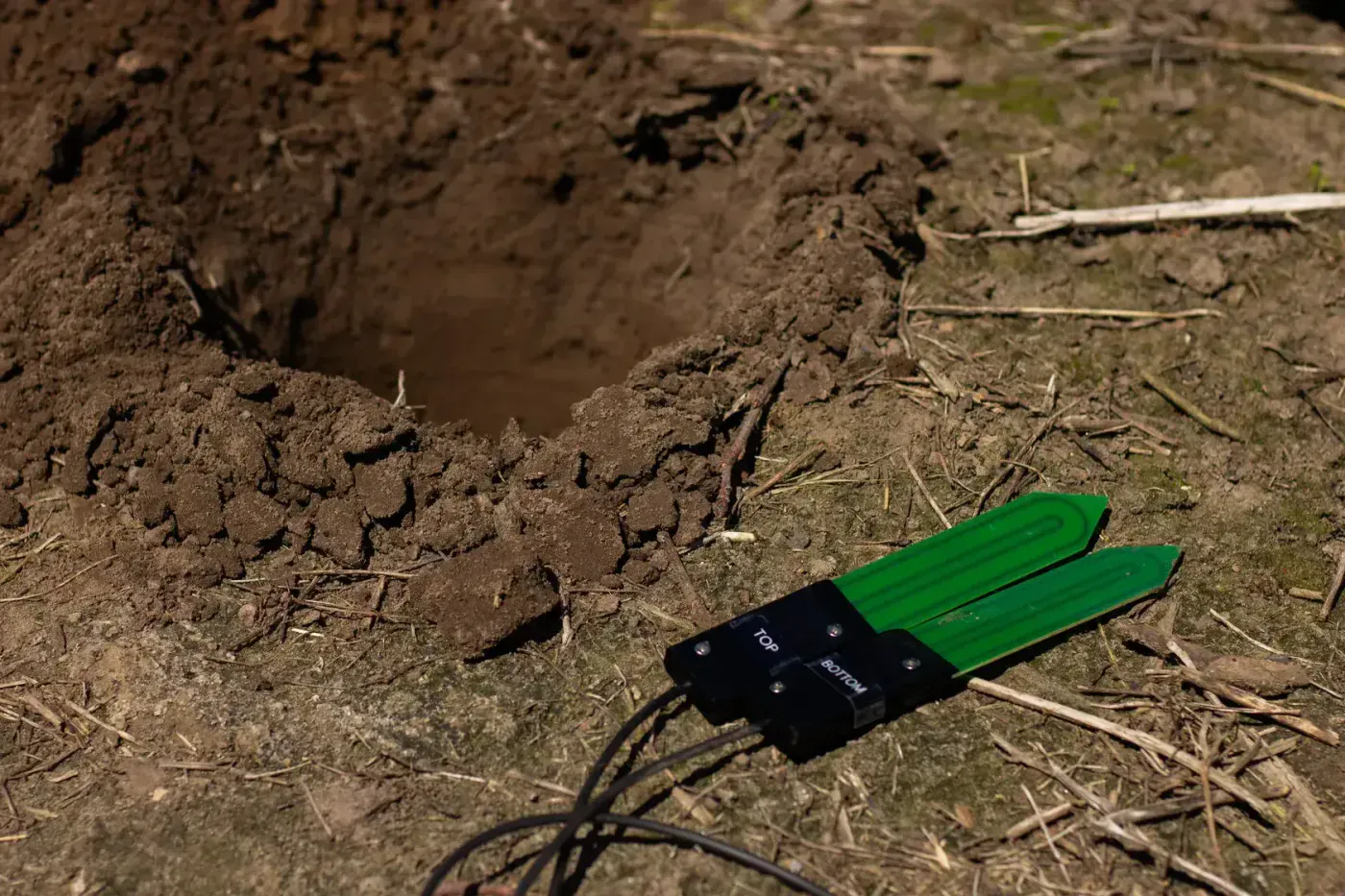
- Soil moisture sensors: Provide real-time data on soil moisture levels at different depths.
How SoilSense can help
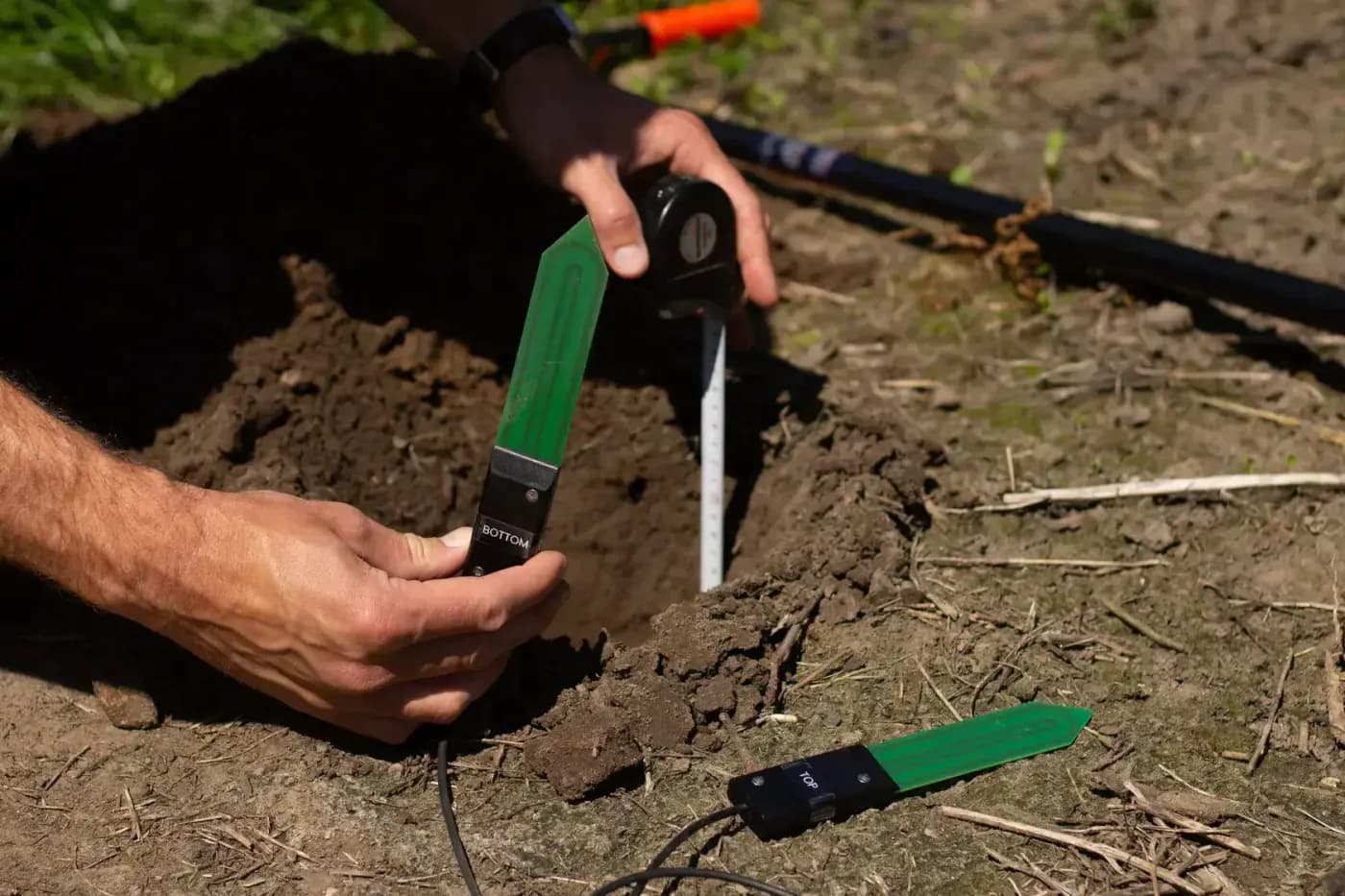
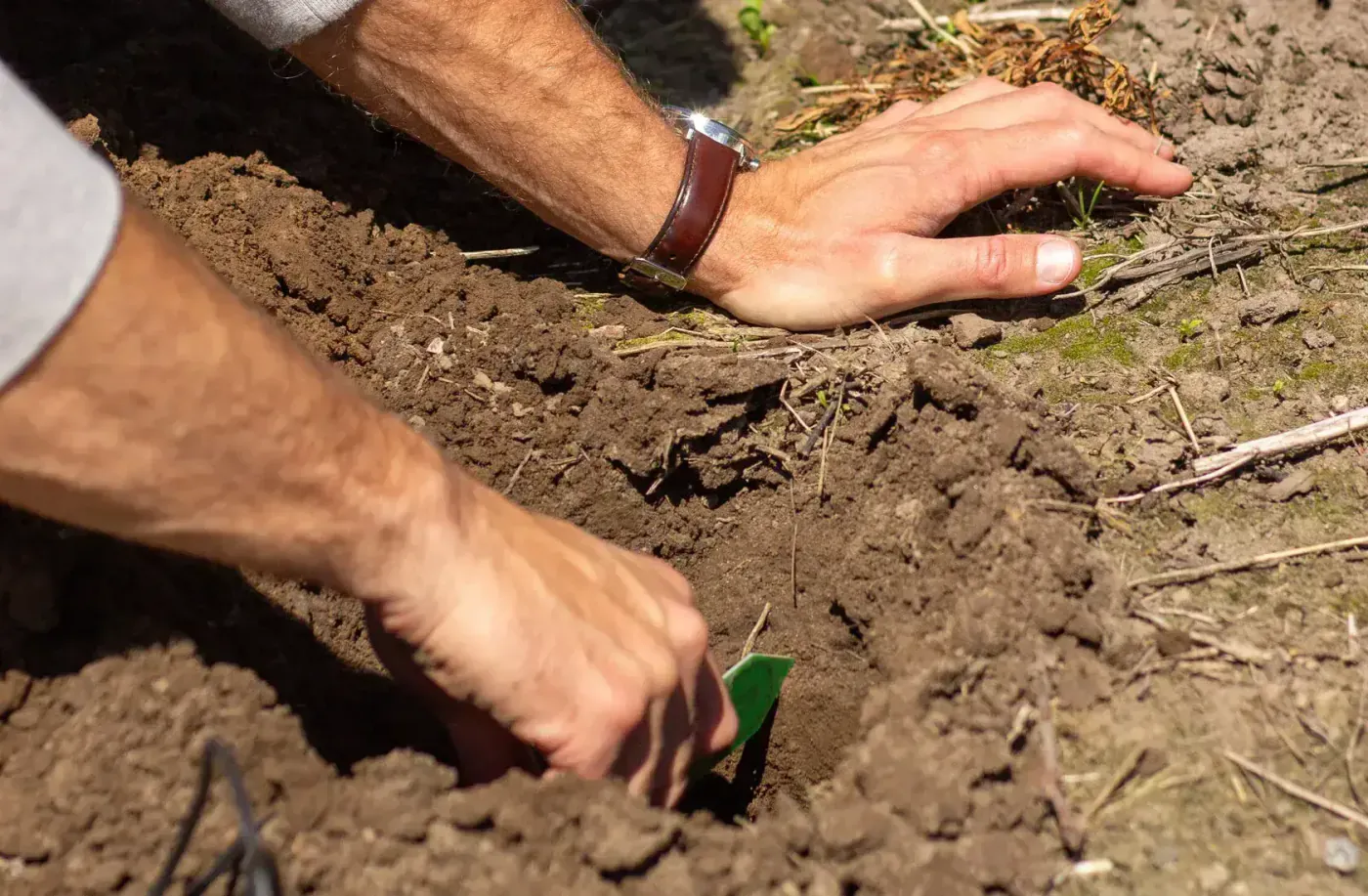
At SoilSense, we have developed an easy to use decision support system for irrigation. Using the most accurate sensors on the market, our system is the easiest solution to determine field capacity: it automatically calculates the soil’s field capacity using real-time soil moisture data from our sensors in the field.
By accurately determining field capacity, our algorithm calculates the amount of water available to plants and displays it as an optimal moisture range on our online dashboard.
This feature helps growers make well-informed decisions regarding their irrigation and soil management practices, resulting in significant time savings and more efficient resource management.
Conclusion
Field capacity is a fundamental concept that underpins effective soil and water management. By understanding and managing field capacity, farmers, gardeners, and environmental managers can ensure sustainable water use, healthy soils, and optimal plant growth. As we face growing challenges related to water scarcity and environmental degradation, the importance of field capacity cannot be overstated. By maintaining soil moisture at the right levels, we can achieve productive agriculture and a healthier environment.
Ready when you are
Talk to SoilSense — free
A 30-minute consultation, no commitment. We'll help you decide whether SoilSense is a fit for your operation.