
Lesson B
Get it in the ground, and read your first numbers
A sensor only tells the truth if it's installed well. This lesson shows you where to put it, how to avoid the one common mistake, and how to make sense of the numbers that start arriving.
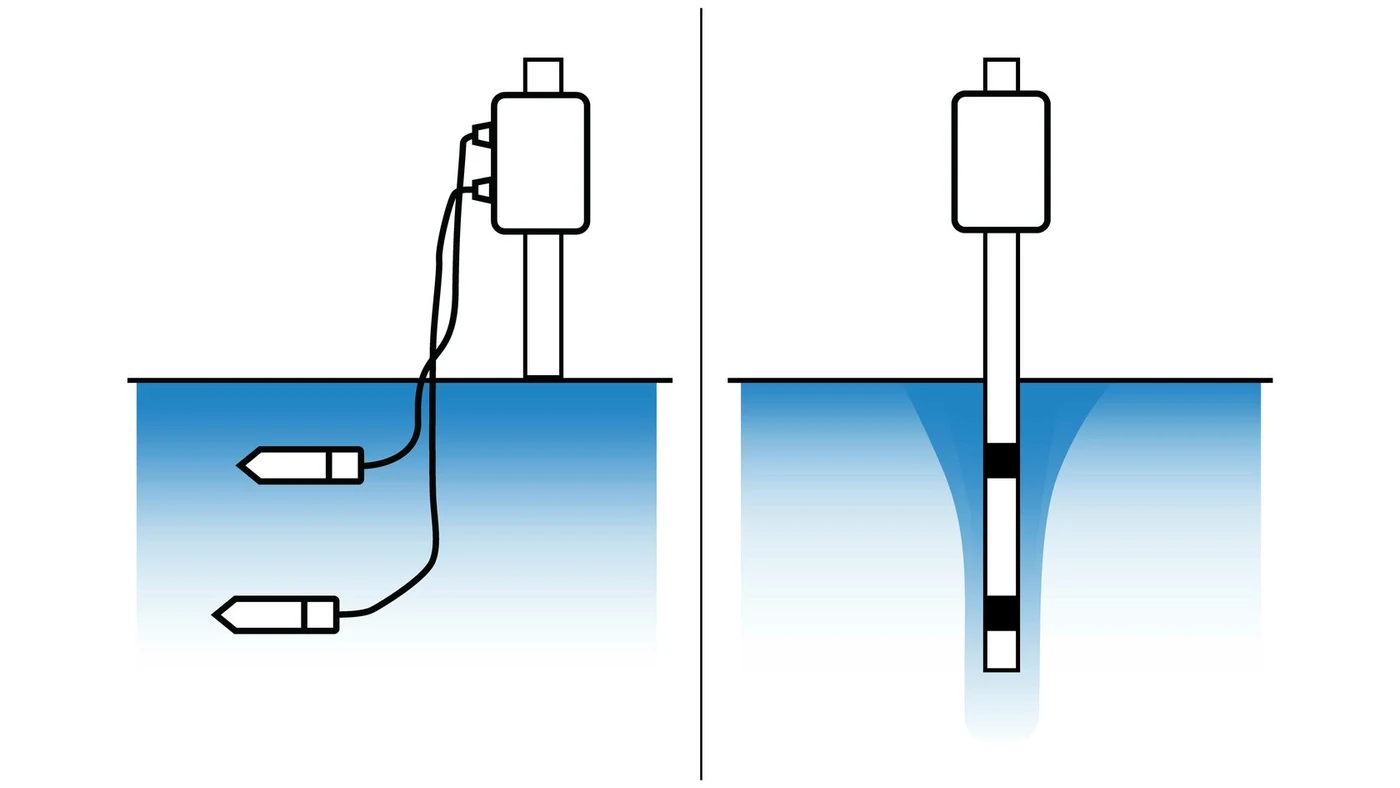
Place it where the roots drink
Install your sensors in the active root zone of a spot that represents the whole irrigation block — not the wettest corner, not the driest. For most crops, a shallow sensor and a deeper one give you the full picture of water coming in and water draining away.
The one mistake to avoid: air gaps
The most common installation error is leaving air pockets around the sensor. Air doesn't hold water, so a gap makes the soil look drier than it really is. Make firm, complete contact between the sensor and undisturbed soil, and pack the hole back the way you found it.
A snug fit reads true; an air gap reads false
Firm contact
Soil packed firmly along the whole blade — a reading you can trust.
Air gap
A pocket of air throws the reading off: usually too dry, since air holds no water — but it can also read too wet, when irrigation channels straight down the gap. Either way, it isn't your soil.
Reading water in normal units
Your first readings arrive as Volumetric Water Content — a percentage. A sandy soil might sit around 10–15%, a clay soil around 30–40%, and both can be perfectly happy. That's the catch with raw VWC: the same number means different things in different soils. We fix that in the next two lessons.
For now, the useful habit is to watch the shape of the line over days: a rise when you irrigate or it rains, a slow fall as the crop drinks. That rhythm is your field breathing.
What good data looks like
Healthy data has a clear daily and seasonal rhythm: sharp jumps up after watering, gentle slopes down in between, deeper sensors lagging the shallow ones. Flat lines, wild jumps, or no response to irrigation usually point to an air gap or a placement problem — worth fixing early.
How SoilSense does it for youFirst data in minutes, not weeks
SoilSense ships pre-configured and powered by solar, so once the probe is seated you see live readings on your phone within minutes — no app to wire up, no gateway to configure. The chart below is a real SoilSense feed.